RO Membrane Solutions: Advanced Water Purification Technology
Discover insights on water treatment solutions and technologies.
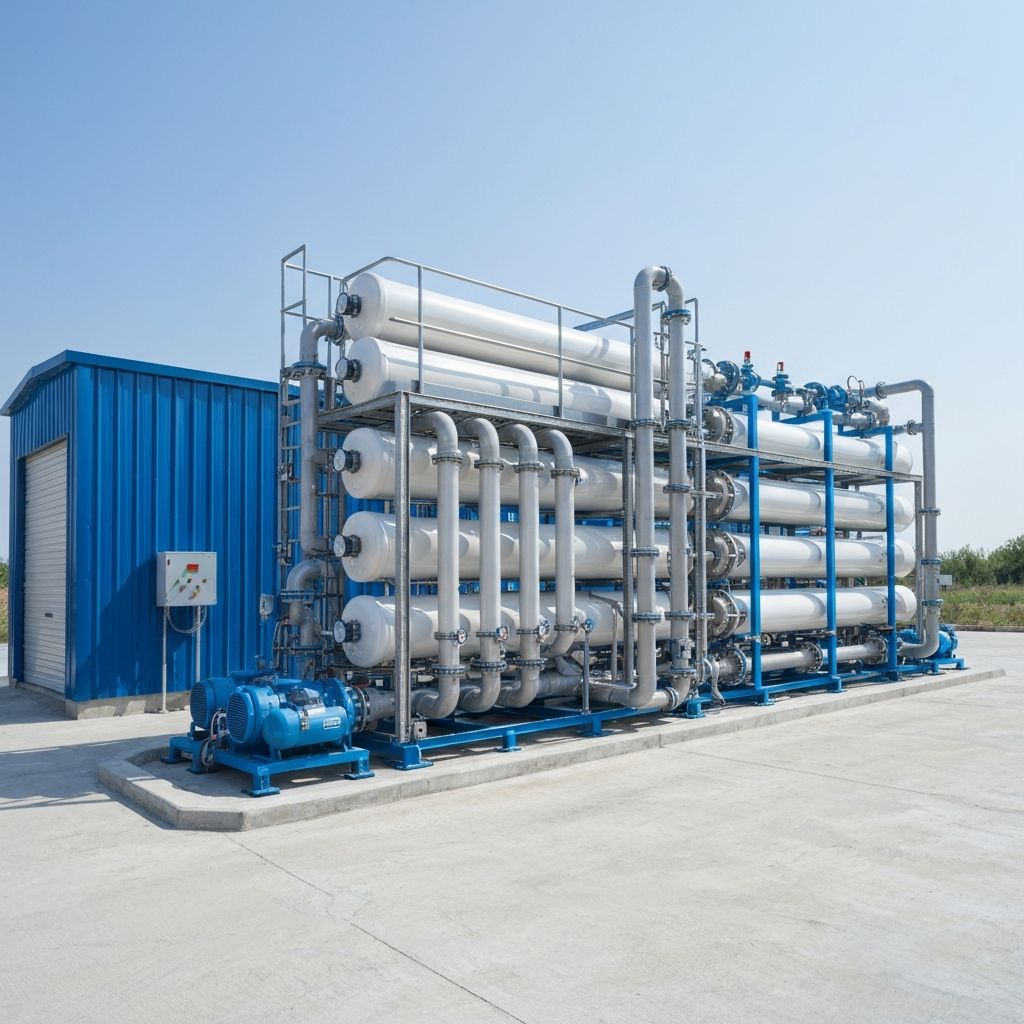
Reverse Osmosis (RO) membrane technology has revolutionized water treatment, providing unparalleled purification capabilities for industrial, commercial, and residential applications. At ChemParks, we offer cutting-edge RO membrane solutions designed to meet the most demanding water quality requirements.
Understanding Reverse Osmosis Technology
Reverse Osmosis is a pressure-driven membrane separation process that removes dissolved solids, organics, bacteria, and viruses from water. The technology uses semi-permeable membranes with pore sizes as small as 0.0001 microns, effectively removing up to 99.9% of contaminants.
How RO Membranes Work
RO membranes operate on the principle of selective permeability. When pressure is applied to the concentrated side of the membrane, water molecules pass through while larger contaminant molecules are rejected. This process produces highly purified permeate water and a concentrated reject stream.
Types of RO Membranes
Spiral Wound Membranes
The most common RO membrane configuration, offering:
- High packing density for compact systems
- Cost-effective solution for most applications
- Easy replacement and maintenance
- Available in various sizes and configurations
Hollow Fiber Membranes
Ideal for specific applications requiring:
- Higher surface area in limited space
- Lower operating pressures
- Excellent for wastewater treatment
- Resistant to fouling in certain conditions
Industrial Applications
Power Generation
RO systems are critical for power plant operations:
- Boiler feedwater treatment to prevent scaling
- Cooling tower makeup water purification
- Wastewater recycling for zero discharge
- Closed-loop cooling system water treatment
Pharmaceutical Industry
Meeting stringent pharmaceutical water standards:
- USP purified water production
- Water for Injection (WFI) systems
- Critical process water treatment
- Validated and GMP-compliant systems
Food and Beverage
Ensuring product quality and safety:
- Bottled water production
- Brewery water treatment
- Beverage ingredient water purification
- Process water recycling
System Design Considerations
Pretreatment Requirements
Effective pretreatment is essential for RO membrane longevity:
- Multimedia Filtration: Removes suspended solids and turbidity
- Softening: Prevents hardness scaling on membrane surfaces
- Antiscalant Dosing: Inhibits scale formation at high recoveries
- Activated Carbon: Removes chlorine and organic compounds
- Cartridge Filtration: Final particulate protection
System Configuration Options
Single Pass Systems
Basic configuration for standard applications with moderate recovery rates (50-75%).
Double Pass Systems
For ultrapure water requirements with secondary RO polishing for superior quality.
Split Pass Systems
Optimizes recovery by treating permeate and reject streams separately.
Performance Optimization
Key Performance Indicators
- Rejection Rate: Typically 95-99% for most contaminants
- Recovery Rate: 50-85% depending on feed water quality
- Flux Rate: 15-25 GFD (gallons per square foot per day)
- Operating Pressure: 150-1,000 psi based on salinity
Membrane Maintenance
Proper maintenance ensures optimal performance and membrane life:
- Regular performance monitoring and data logging
- Scheduled cleaning-in-place (CIP) procedures
- Proper storage of spare membranes
- Timely membrane replacement
Energy Efficiency Solutions
Energy Recovery Devices
Modern RO systems incorporate energy-saving technologies:
- Pressure Exchangers: Capture energy from reject stream
- Turbochargers: Boost feed pressure using waste energy
- Variable Frequency Drives: Optimize pump efficiency
- High-Efficiency Motors: Reduce electrical consumption
Troubleshooting Common Issues
Membrane Fouling
Identify and address fouling causes:
- Scaling from hardness and silica
- Biofouling from bacterial growth
- Colloidal fouling from fine particles
- Organic fouling from natural matter
Performance Decline
Monitor for performance indicators:
- Decreased permeate flow rate
- Reduced salt rejection
- Increased pressure drop
- Higher conductivity in permeate
Future of RO Technology
Emerging innovations in RO membrane technology:
- Graphene-based membranes for higher flux
- Nanocomposite membranes with anti-fouling properties
- Smart membranes with self-cleaning capabilities
- Low-energy membrane configurations
Conclusion
RO membrane solutions continue to be at the forefront of water treatment technology, providing reliable and efficient purification for diverse applications. With proper system design, maintenance, and optimization, RO systems deliver superior water quality while minimizing operating costs.
ChemParks offers comprehensive RO membrane solutions tailored to your specific water treatment needs. Contact us to learn how our advanced RO technologies can benefit your operations.