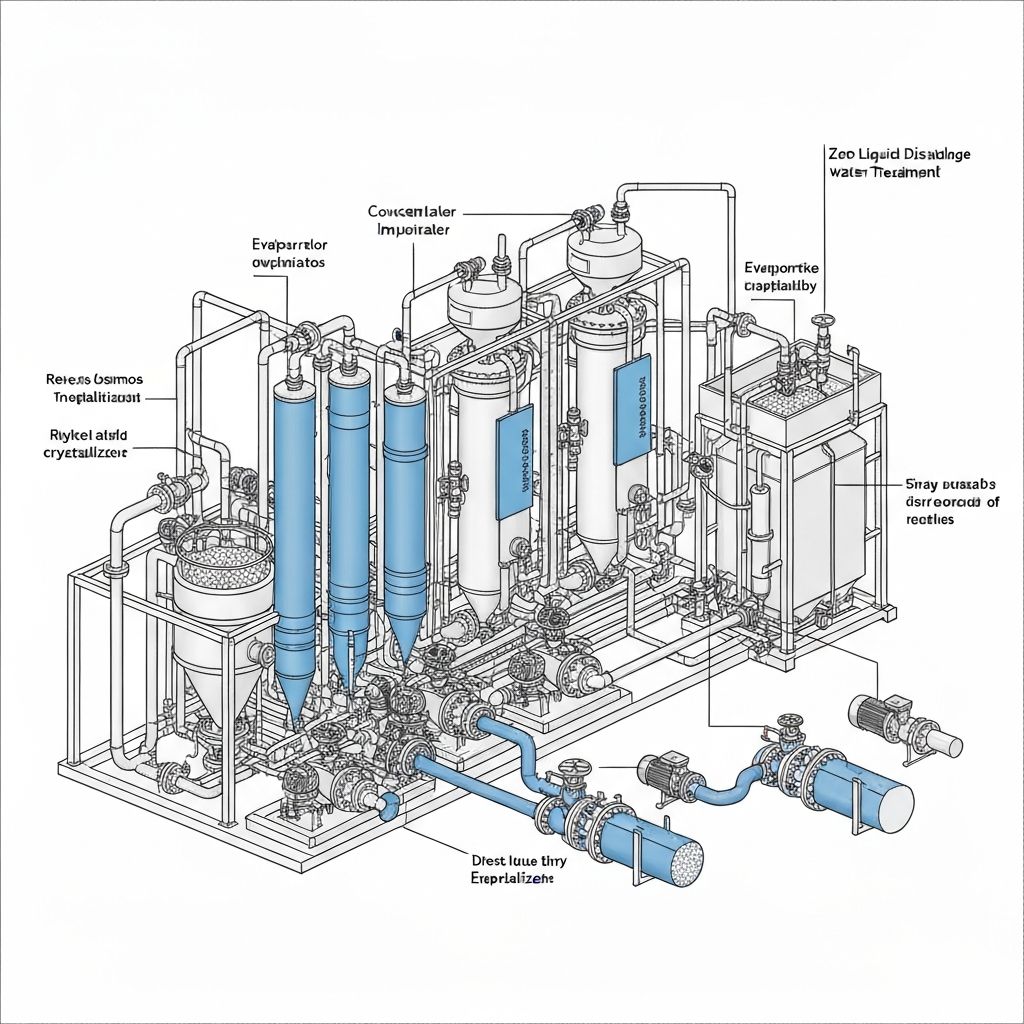
Water Treatment in 2025: Trends and Innovations
Discover insights on water treatment solutions and technologies.

The water treatment industry is experiencing unprecedented transformation driven by technological innovation, environmental imperatives, and digital integration. As we navigate through 2025, several key trends are reshaping how industries approach water management and treatment.
The Digital Revolution in Water Treatment
Digital transformation is perhaps the most significant trend shaping the water treatment landscape in 2025. Smart water treatment systems leveraging IoT, AI, and machine learning are no longer futuristic concepts but practical solutions delivering measurable benefits.
IoT-Enabled Treatment Plants
Internet of Things (IoT) technology has revolutionized water treatment plant monitoring and control. Modern plants deploy thousands of sensors continuously measuring parameters such as pH, turbidity, conductivity, pressure, and flow rates. This real-time data enables:
- Predictive maintenance algorithms that prevent equipment failures
- Optimized chemical dosing based on real-time water quality
- Remote operation capabilities reducing on-site staffing needs
- Automated compliance reporting and documentation
AI-Powered Process Optimization
Artificial intelligence algorithms are transforming water treatment from reactive to predictive. Machine learning models analyze historical and real-time data to:
- Predict fouling events before they impact performance
- Optimize membrane cleaning schedules for maximum efficiency
- Adjust treatment parameters based on influent quality variations
- Minimize energy consumption through intelligent load management
Advanced Materials and Membrane Technologies
Material science innovations are driving significant improvements in treatment efficiency and cost-effectiveness.
Next-Generation Membranes
2025 has seen remarkable advances in membrane technology:
- Graphene-Based Membranes: Offering 10x higher flux rates with minimal fouling
- Aquaporin Membranes: Biomimetic channels for selective water transport
- Self-Cleaning Membranes: Embedded photocatalytic materials prevent fouling
- Hybrid NF/RO Membranes: Tunable selectivity for specific contaminants
Advanced Oxidation Materials
Novel catalyst materials are making advanced oxidation processes more efficient:
- Nano-titanium dioxide catalysts for UV-driven degradation
- Carbon nanotube electrodes for electrochemical oxidation
- Metal-organic frameworks (MOFs) for targeted contaminant removal
- Plasma-activated water generation systems
Energy Harvesting and Recovery
Energy sustainability has become a critical focus in water treatment design. Innovative energy recovery systems are now standard in modern treatment plants.
Pressure-Driven Energy Recovery
Advanced energy recovery devices (ERDs) now capture up to 98% of the energy from high-pressure reject streams. New turbine-based ERDs can even generate electricity during low-demand periods.
Thermal Energy Integration
Heat exchangers and thermal energy storage systems enable waste heat recovery from industrial processes to power thermal treatment units, reducing overall energy consumption by 40-60%.
Decentralized Water Treatment
The paradigm is shifting from centralized to decentralized treatment systems, enabled by technological advances and changing infrastructure needs.
Modular Treatment Systems
Containerized treatment modules with plug-and-play capabilities allow rapid deployment and easy scaling. These systems are particularly valuable for:
- Emergency water supply during natural disasters
- Remote industrial operations
- Seasonal demand fluctuations
- Temporary construction sites
Point-of-Use Treatment
Advanced point-of-use systems now provide industrial-grade water quality at the point of consumption, eliminating distribution infrastructure and associated quality degradation.
Circular Water Economy
The concept of circular water economy has gained significant traction in 2025, focusing on water reuse, resource recovery, and closed-loop systems.
Resource Recovery Technologies
Modern treatment systems are designed as resource recovery facilities:
- Nutrient Recovery: Phosphorus and nitrogen extraction for fertilizer production
- Biogas Generation: Anaerobic digestion of organic waste for energy production
- Metal Recovery: Precious and strategic metal extraction from industrial waste streams
- Water reuse: Closed-loop systems achieving 95%+ water recovery rates
Emerging Contaminant Treatment
2025 has seen intensified focus on emerging contaminants that were previously unregulated or unaddressed.
PFAS and Forever Chemicals
Advanced treatment technologies for PFAS removal include:
- Specialized anion exchange resins with high selectivity
- Advanced oxidation with sulfate radical generation
- Plasma-based destruction technologies
- Hybrid membrane-adsorption systems
Microplastic Removal
Innovative microplastic removal technologies now achieve >99% removal efficiency:
- Multi-stage membrane filtration with pore sizes down to 0.01 μm
- Electrocoagulation followed by dissolved air flotation
- Biological degradation using specialized microorganisms
- Advanced sedimentation with polymer-based flocculants
Regulatory and Compliance Trends
Regulatory frameworks continue to evolve, driving innovation in treatment technologies and monitoring approaches.
Real-Time Compliance Monitoring
Continuous emissions monitoring systems (CEMS) are now mandatory for many industrial discharges, with real-time data transmission to regulatory authorities.
Water Quality Trading
Water quality trading markets are emerging, allowing facilities that exceed treatment requirements to sell credits to those who don't, creating economic incentives for superior treatment performance.
The Future Outlook
As we look beyond 2025, several trends are expected to accelerate:
- Integration of blockchain technology for water quality tracking and trading
- Quantum computing applications for complex water chemistry modeling
- Advanced materials with self-healing properties for extended equipment life
- Fully autonomous treatment plants requiring minimal human intervention
Conclusion
The water treatment industry in 2025 is characterized by unprecedented innovation and transformation. Digital technologies, advanced materials, and sustainability imperatives are converging to create more efficient, resilient, and environmentally conscious water treatment solutions.
ChemParks remains at the forefront of these innovations, continuously integrating cutting-edge technologies into our solutions. Contact us to learn how the latest advancements can benefit your water treatment operations.